Krenz suggests keeping keywords on a mind map. Obsidian is perfect for that, and Krenz already provides one, but in Chinese.
Krenz-Lighting Lecture 1 HW Materials
Concepts to Consider
Contrast is not only value
- We tend to think of value, but it’s also a shape that “stands out” from the pattern. That can be value, but also cool/warm contrast, saturation, and sharpness.
- Composition lives and dies by their contrast. The interpretation of “what” contrast of it doesn’t really matter, though value is the most common. Color/Contrast Balance
- Colors of varying strength seem to abide by a ratio in order to feel “balanced”. The strongest contrasting shapes (for chosen focal points) deliberately take less (~5-10%) of the composition so they matter that much more. This applies to values too.
- A decent amount of rendering I’ve seen hesitates to go beyond halfway right of the color wheel, even for the focal points. Incorrect saturation can screw with the contrast, so working with these limits in mind seem sensible for now. Don’t rule out the possibility of a second light source existing in a reference. Edge Control
CTRL + BUM (1:15:00)
HueSat and Color Balance is really all you need to color adjust. Curves are more complex.
Value Intuition and Mapping (1:29:00)
In traditional, an art pencil set can be mapped to a numeric grayscale value. Since we deliberately choose what pencil to use for recreating certain shades, there’s a clear mapping and intuitive choice towards that range of value that can be trained. In digital art, values should also be chosen meaningfully, much like picking out a specific pencil hardness.
- There is a “value” associated for each type of pencil. In digital, instead of mapping to a pencil, it’s a numeric value on the far left of the color wheel. (e.g. instead of a 2B pencil, use value 30)
- Or instead of using 4H-2B, use values ranges 10-45.
- Combine this with hues and color relativity, and now you’re playing color wheel geo-guesser. The goal is to reach this level through studies.
Practice using studies
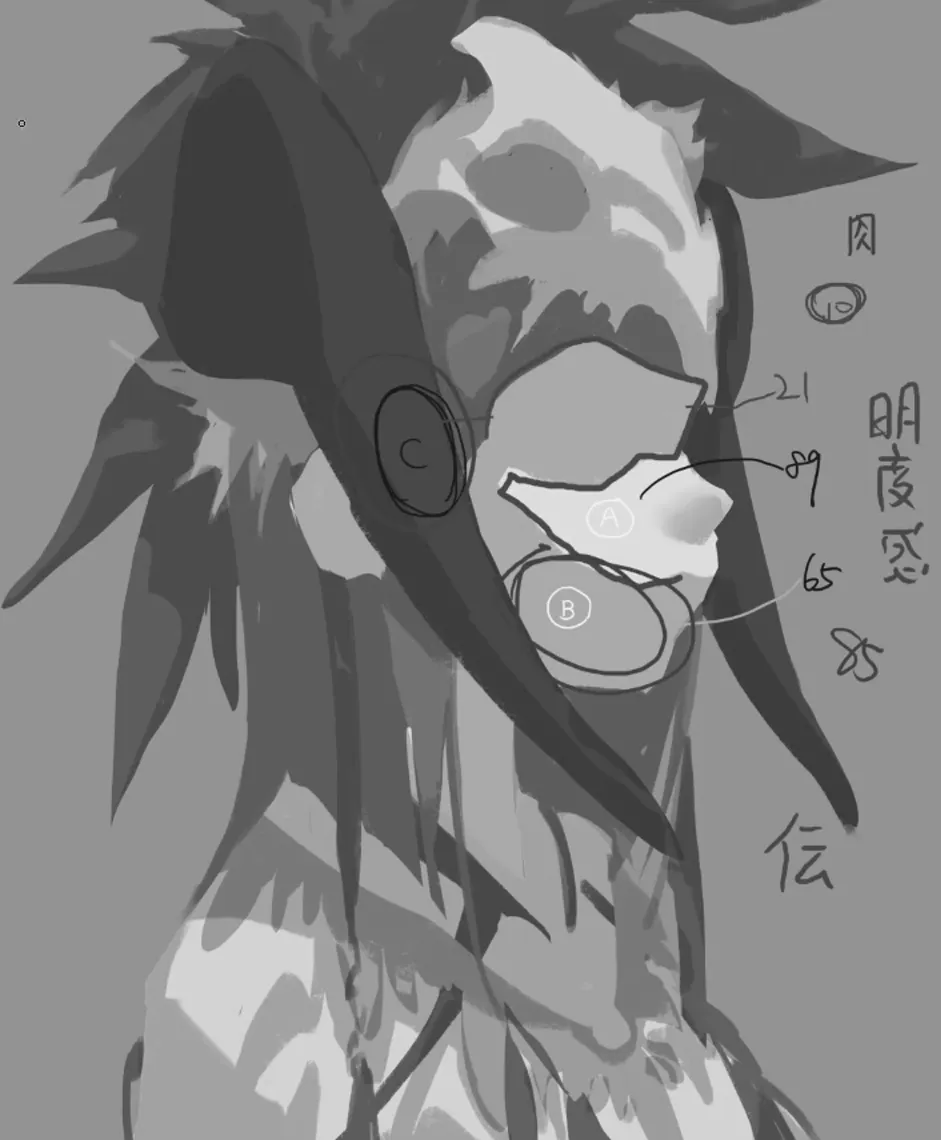
The very act of doing most studies will force you to eyeball and choose values. My hope is to be approximately correct and develop a clear intuition for choosing the right ones. In a 2 value study, you can justify a dark area as pure black. But if trying to emulate the actual reference exactly, you need this developed intuition from sight rather than a generalization from the mind.
Base Colors absorb Background (2:09:00)
You should not finish with a character’s literal base color (e.g. Pikachu is yellow), but one already transformed by the background (whatever color they might be) so they easily integrate.
- If considering the background, the base color tends to be darker, absorbing the hue of the background and lighting.
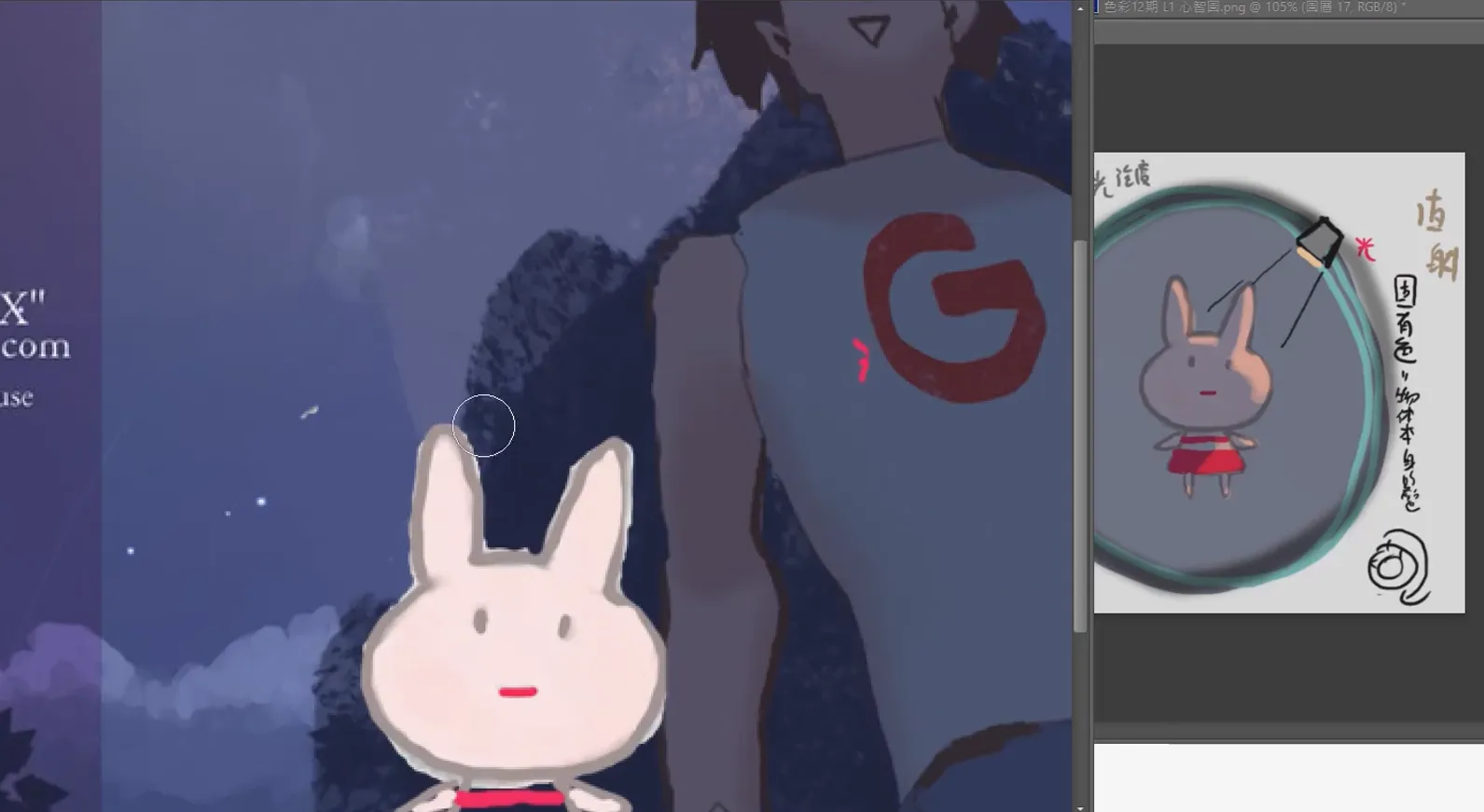
- The right figure is less jarring, as their base colors are transformed by the background content.
Overlaying the background on the base color as a clipping mask multiply layer alleviates the issue. The base colors absorb the hue and value of the background elements.
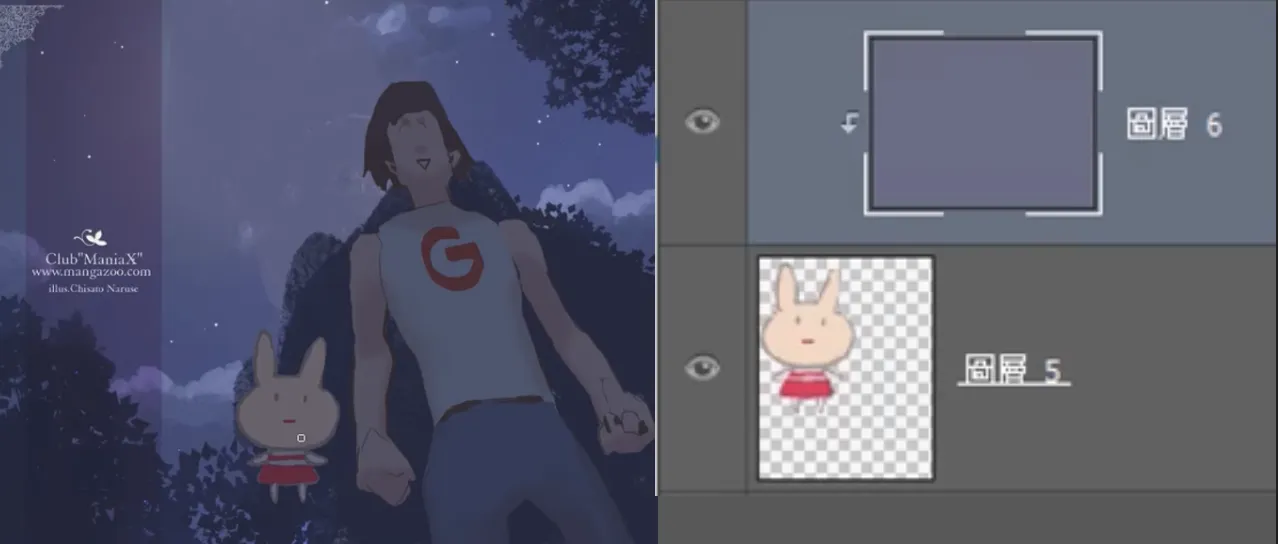 Of course, don’t put this in a white background after the transformation.
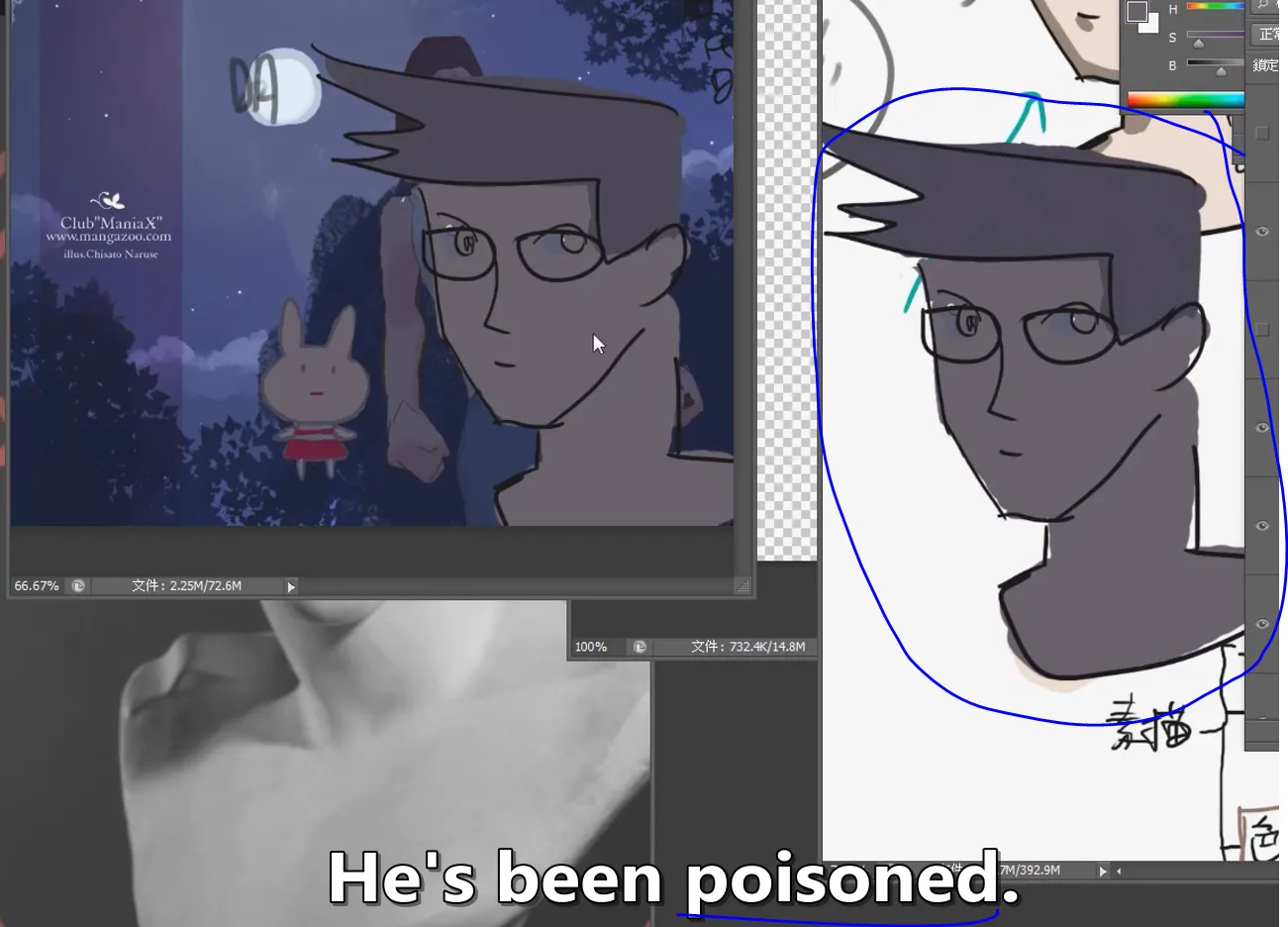
- The skin in the background isn’t pure yellow nor is it pure blue. It’s still perceived as skin because the hue is warmer than everything else, which turns out to be purple. Thus, the base hue “yellow” is transformed cooler by the background to become purple.
Subsurface scattering (2:27:00)
The concept of translucency exposes saturated terminators in lighting. Areas where skin is thin are affected (e.g. fingers, ears, nose)
Color blocking light
Use a hard brush initially, we don’t make to worry about gradients in the early stage. Avoid making “too neat” shapes in favor of variety, larger shapes can be fragmented or disrupted a little. Make sure they still respect the general color block, thought it can deviate slightly from the lighting scenario.
Soft edges
Created by color picking gradients. Do not destroy the original hard shape when creating the soft edge though. Soft light should not feel overused, whereas hard shapes are first class citizens.