Assignment Breakdown
Perform various 2-value studies with varying complex shapes and subjects. Checkpoints B are advanced optional assignments.
- Complete 3 animals in A01 (one must be elephant)
- Complete 3 clothes in A02 (2 difficulty settings, easier one has contour predefined)
- Complete the fire hydrant in B01
- Recreate the lighting scenario in B02
Hints
The key idea is light and shadow difference. A white object in shadow should not be mistaken unintentionally with a light shape, and vice versa. Not all light-shadow boundaries have to be drawn if the focal point is compromised as a result. Ambient or secondary light are more privy to being classified as dark shapes, but even directly lit areas aren’t immune.
Note-taking the reference to clarify shapes is fair game. Using measuring techniques such as grids is allowed and recommended. Use the threshold or contrast filters to suggest potential shapes, but don’t over-rely. Refer to the knowledge supplement slides for more of these techniques.
Threshold Trap
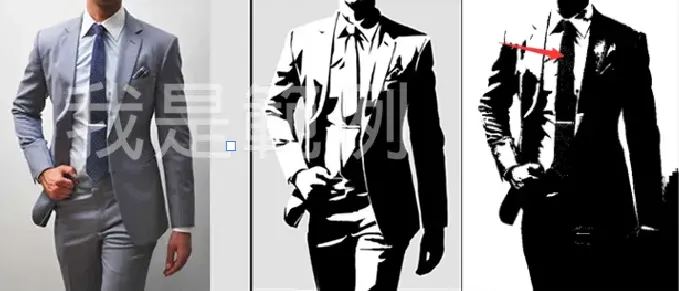
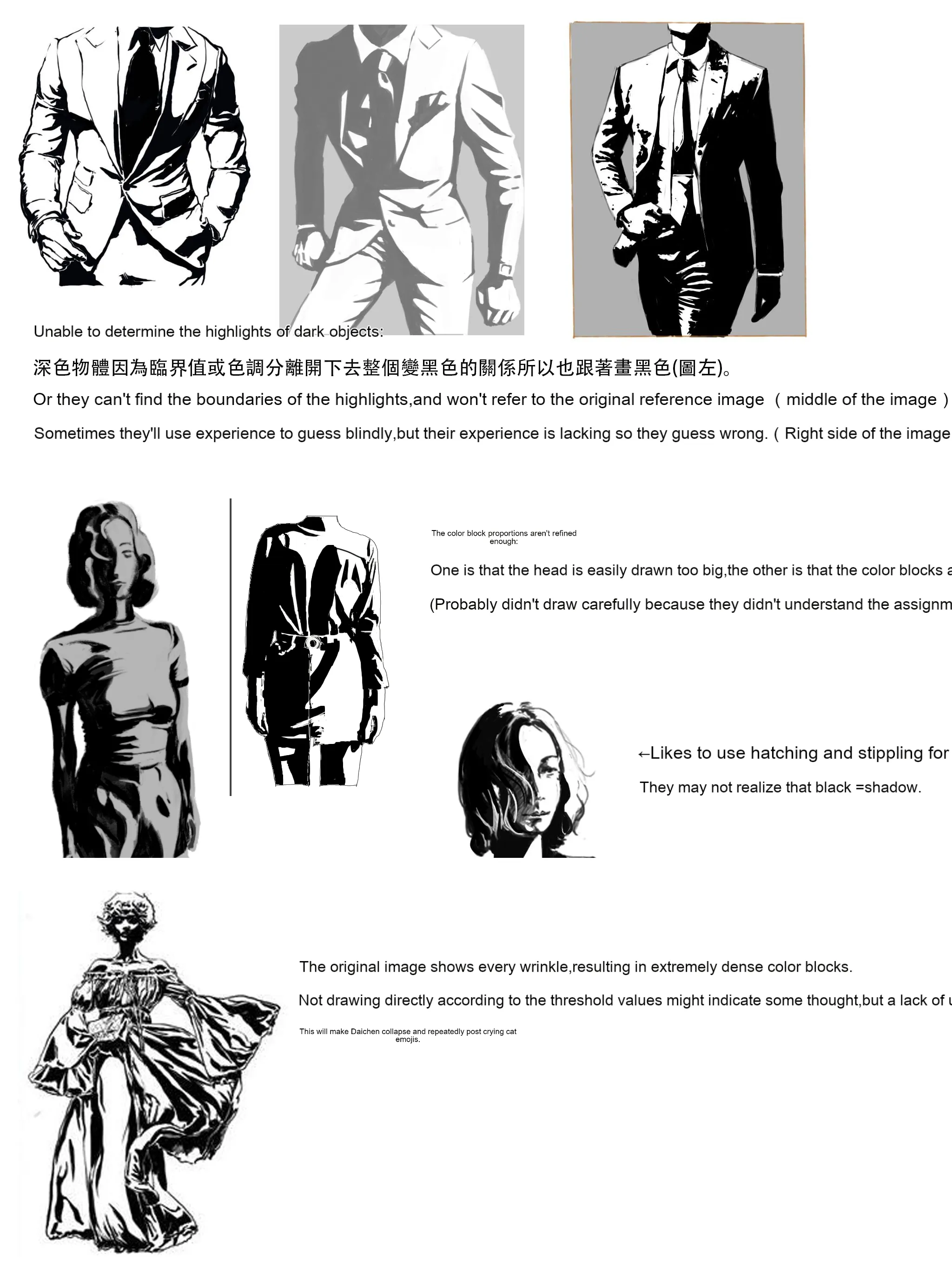
Threshold does not care about lighting and takes literal values to darken or lighten, even if they shouldn’t actually be depicted as such.
This also happens if you assign light-dark shapes based on the value. Value doesn’t matter here, only the light and dark shapes.
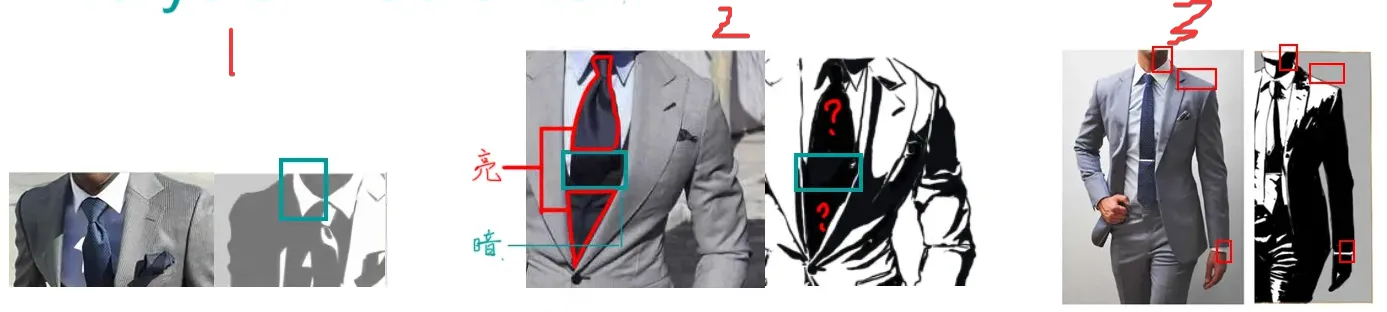
The tie is very obviously in lighting, but threshold ignores this.
Middle repeats the tie example First is the same but in reverse Third is still wrong but on a smaller scale
Remember Key Shapes
Shapes consist primarily of angles, which are easy to spot if you are actually looking for them. Identify shapes through the light-shadow boundary (not literal values).
Identifying Mistakes
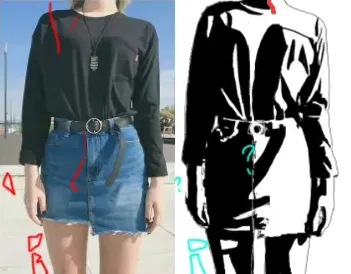
Angle deficits severely compromise shape accuracy, even if the blocks themselves are placed in approximate locations.
Shapes can be memorized or associated with something beforehand to remain faithful to their angles. Either way, angle discrepancies are very noticeable if directly looking for them.
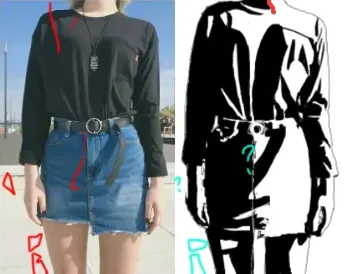
Assignment Content
I’ll use the naming convention provided by the folders this time. Checkpoints are A01, A02, B01, B02. I won’t be covering supplementary materials unless I deem them important. They seem to be optional reference material or handpicked references relating to the assignment.
Lesson 2 Mind Map
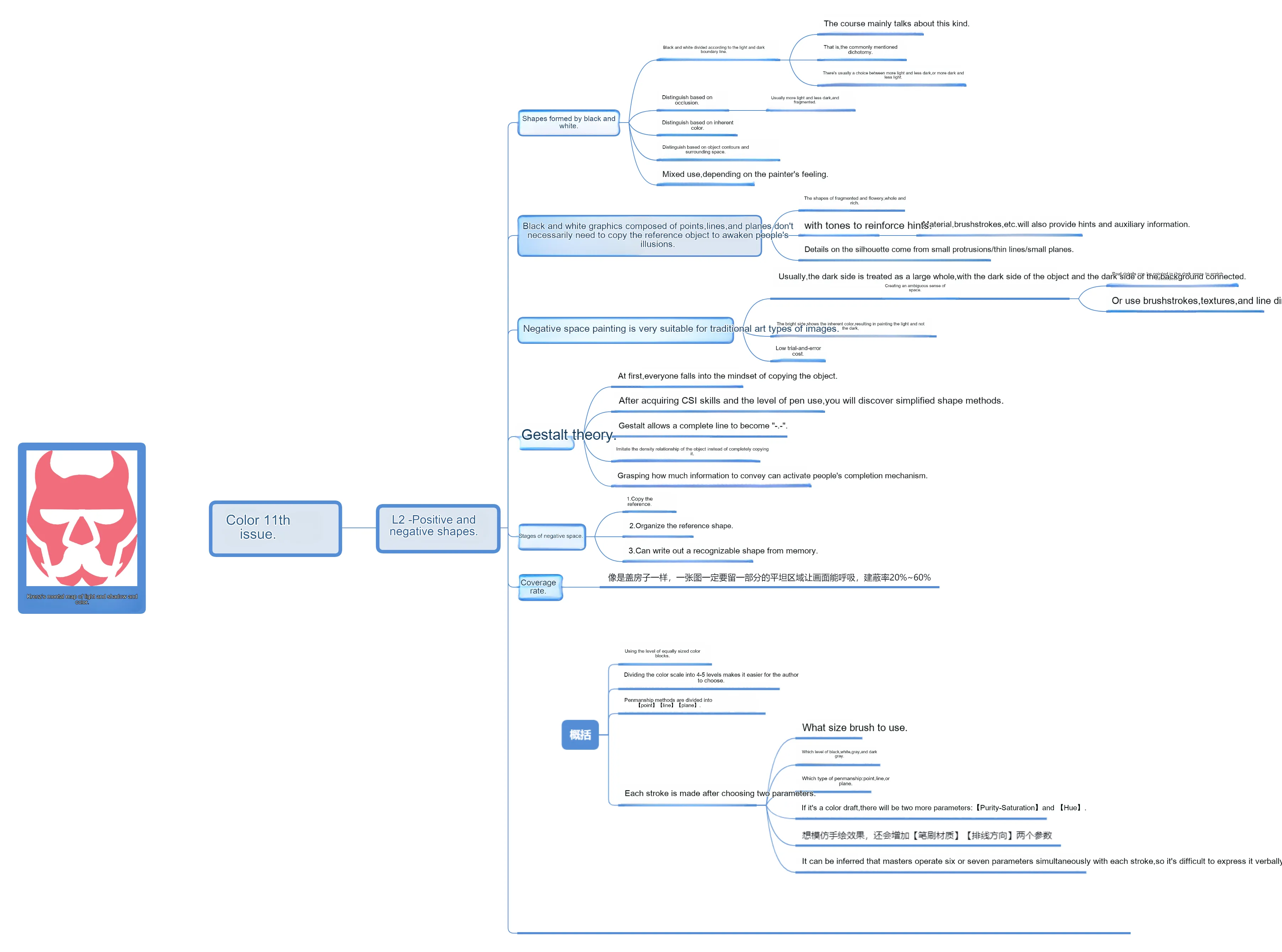
HW 2 Summary

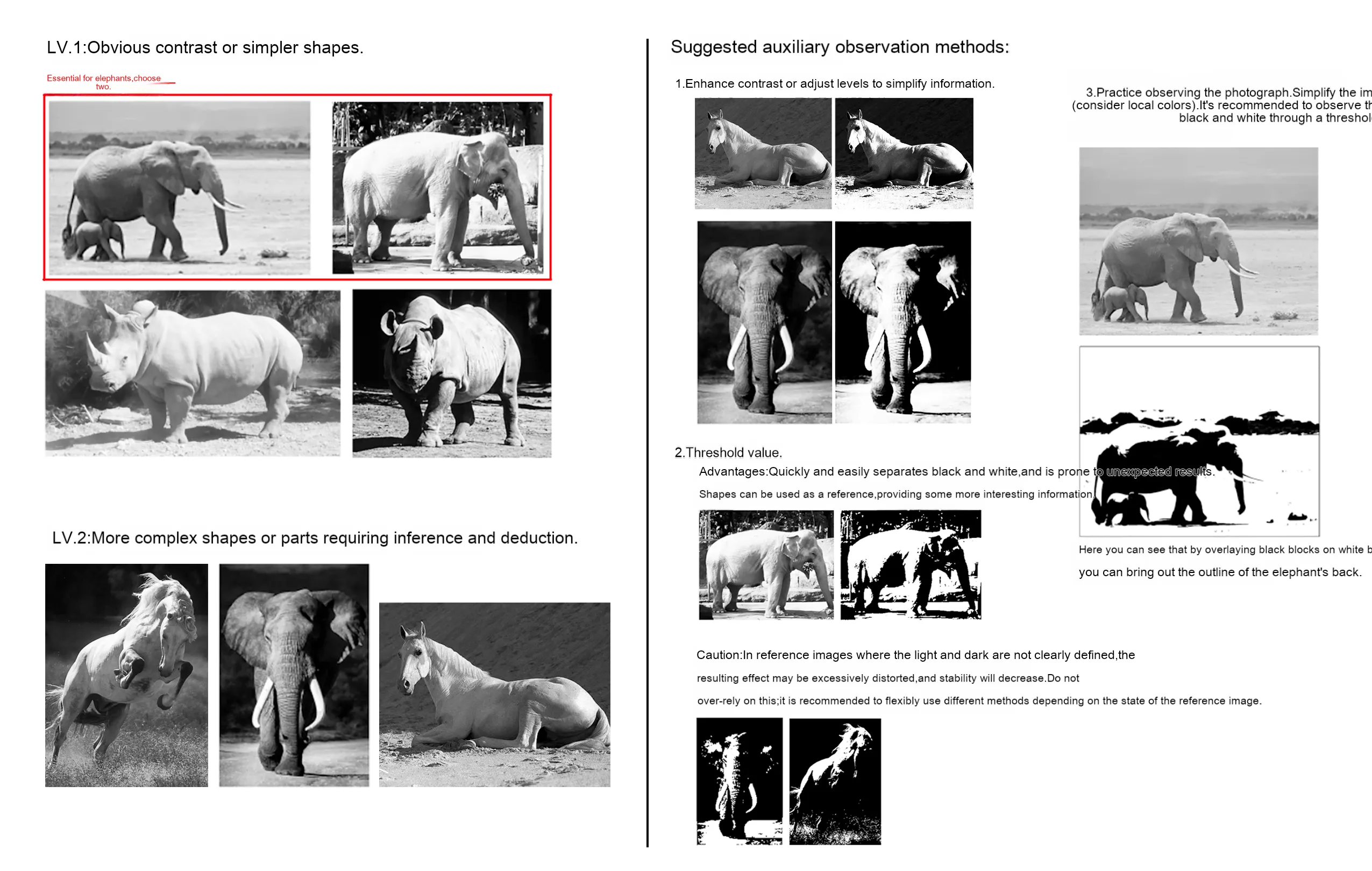
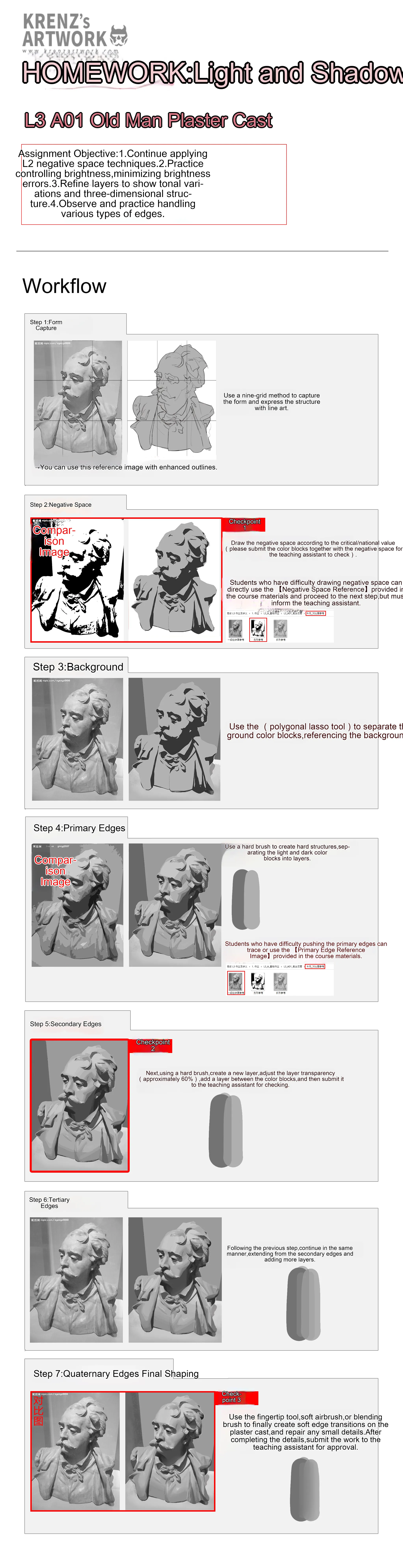
HW 2 A01
Workflow
Reference
HW 2 A02 Clothes
Detailed Process
Difficulty chart - proceed in order
Common mistakes
Sample Studies
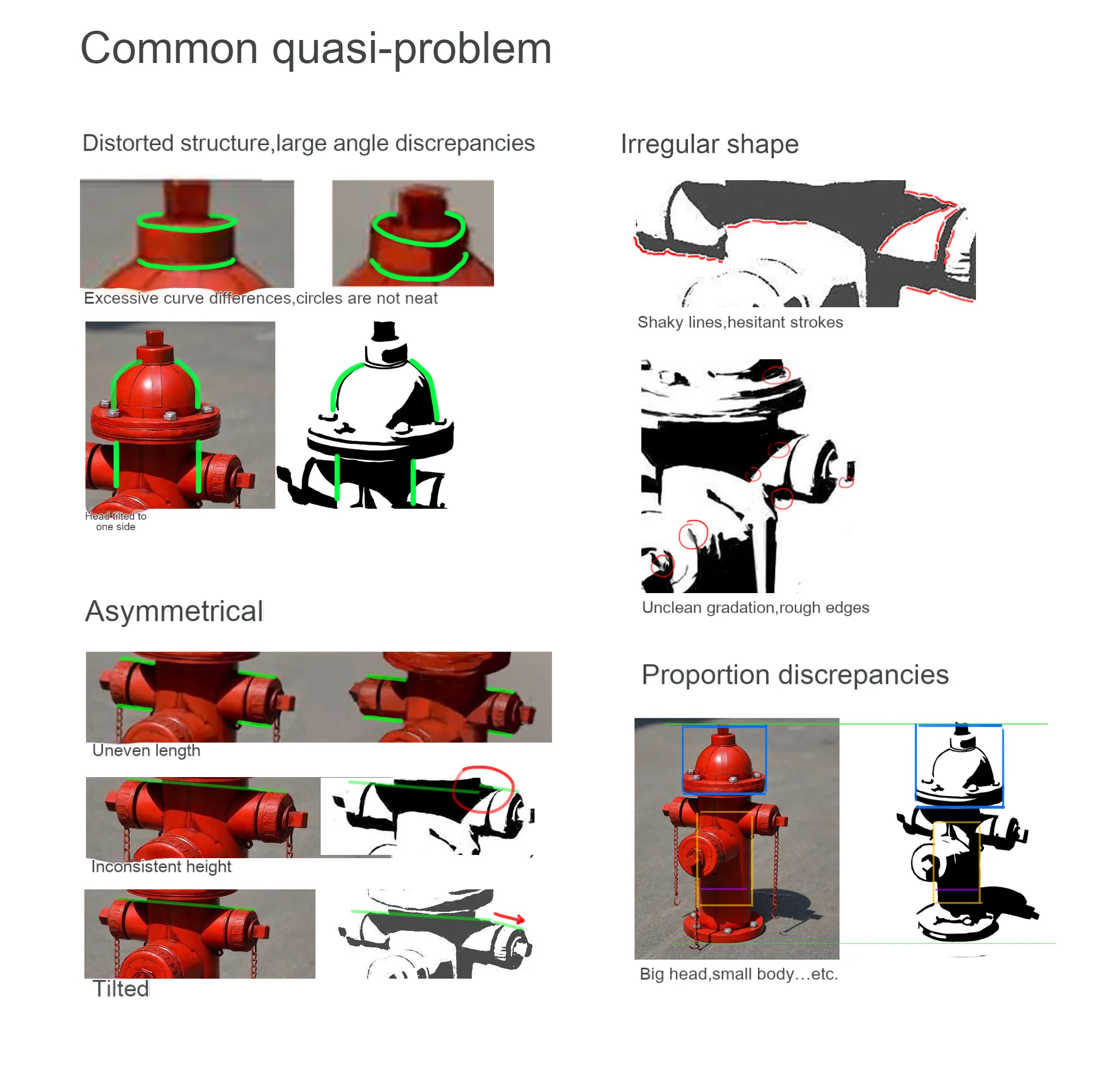
B01 Fire Hydrant
Use the provided psd titled for classmate use. L2_B01_Detailed Process.webp
L2_B01_Teaching Assistant Process
L2_B01_Common Issues
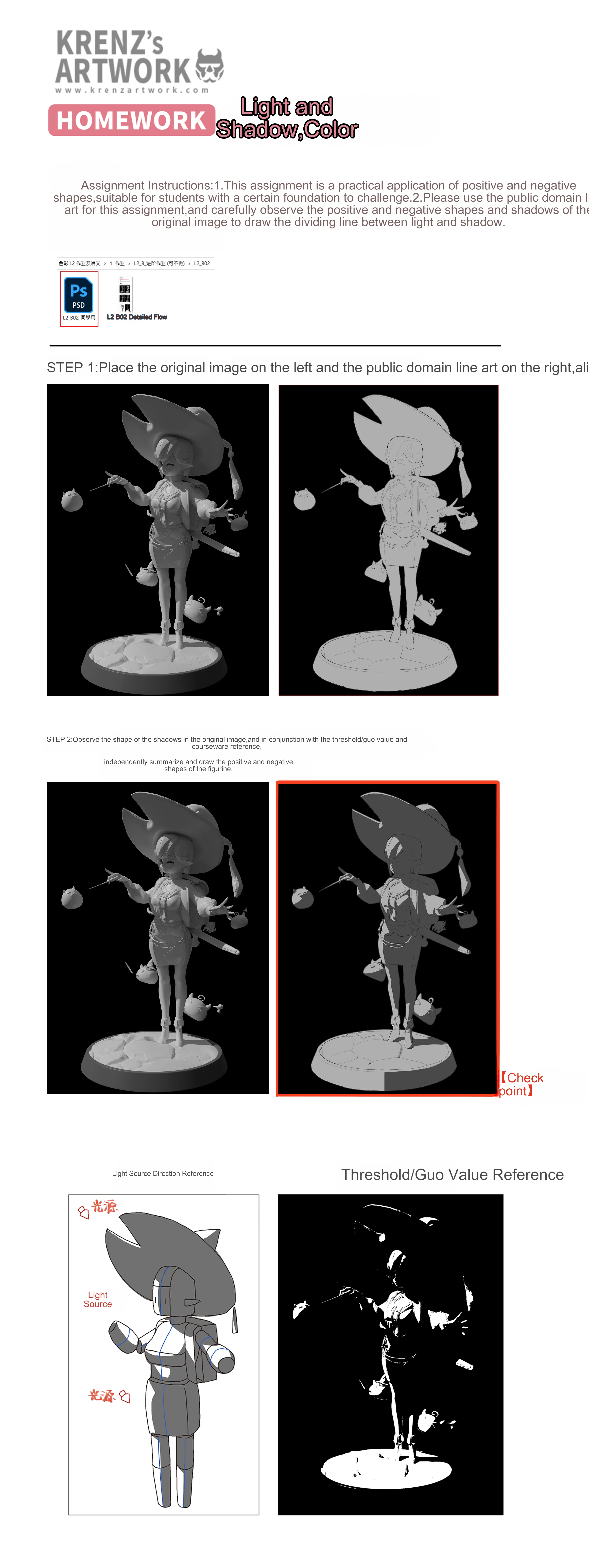
B02
Used the provided PSD.
Knowledge Supplements
P1_Preparation before drawing_Software functions
P2_Definition of terms
P3_Grab type
P4_Boundary analysis and arrangement
P5_FAQ Lots of text overlap here. Mainly commenting about combining shapes into blocks, grouping, and finer detail control of lines that carve into these shapes. Don’t make the blocks too uniform, but don’t overuse lines. Figure a in the bottom middle depicts a proper balance. You can make somewhat complex shapes in a unified brush stroke using lasso.
In this assignment, we care about the light-shadow boundary, not the literal value. A white clothes in shadow can still be depicted as black precisely because we want to imply the shadow.
P6_Important notes when submitting